



July 28, 2026
Two Decades of Impact: HAPCOG Dissemination Event
Two Decades of Impact: Healthy Life for All Foundation Reaches Global Research Milestone at HAPCOG Dissemination Event


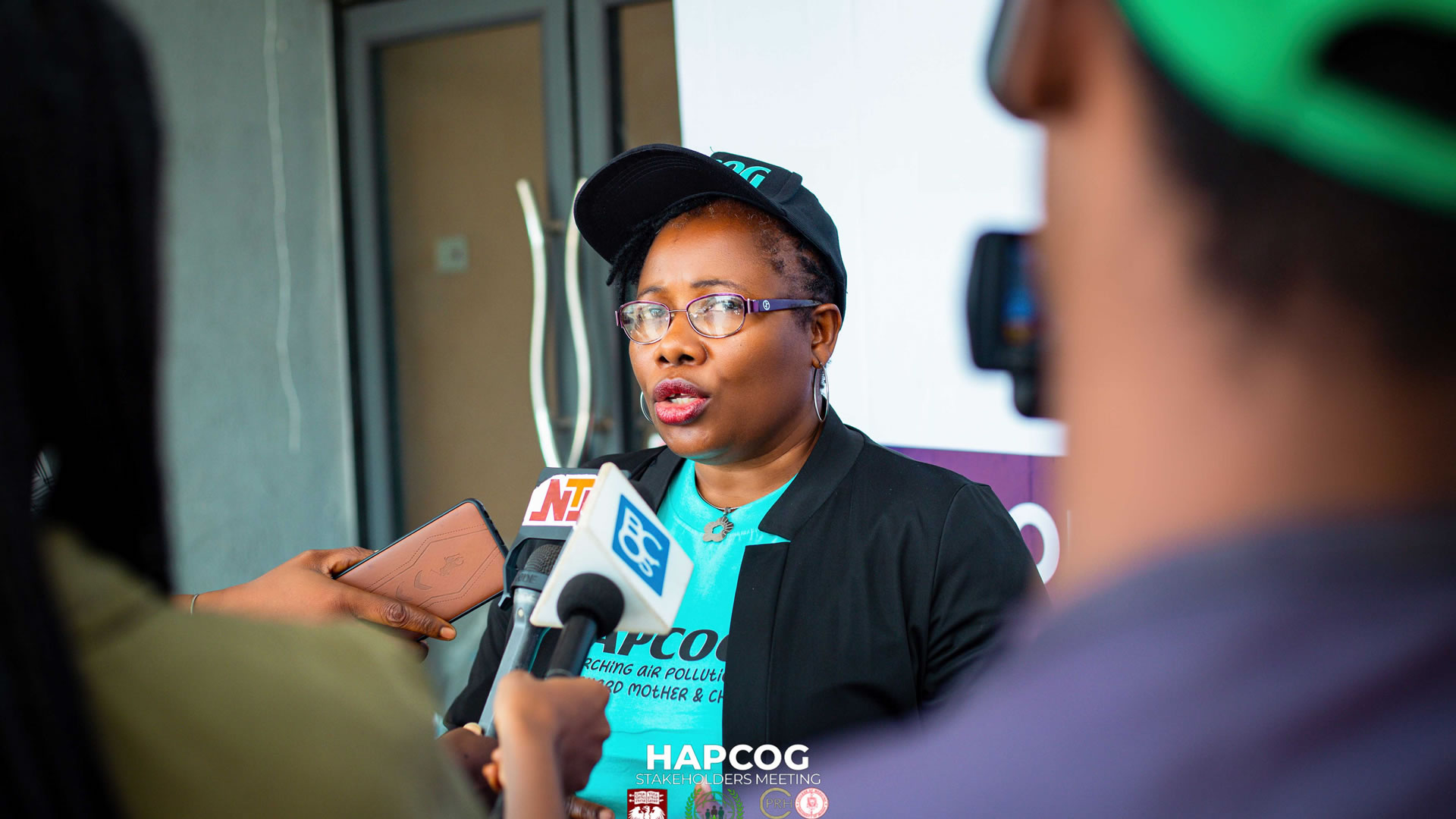
The choice of cooking fuel in Nigerian kitchens is shifting from a simple economic decision to a critical factor in child brain development. For nearly two decades, an international team of researchers quietly tracked the health of mothers and their children across the 11 local government areas of Ibadan, Oyo State.
The culmination of this monumental research, the Household Air Pollution and Cognition (HAPCOG) study, was finally presented at a landmark stakeholders, dissemination meeting in Ibadan.
The findings are stark. Traditional cooking fuels like firewood and kerosene smoke do not just damage lungs. They actively impair the developing brains of children, permanently altering their cognitive trajectories and future productivity.
The findings are stark. Traditional cooking fuels like firewood and kerosene smoke do not just damage lungs. They actively impair the developing brains of children, permanently altering their cognitive trajectories and future productivity.
The Background: A 20 Year Public Health Crusade
To understand the gravity of the HAPCOG findings, one must look back at its origins. The research represents a robust, multi-decade collaboration between the Ibadan-based Healthy Life for All Foundation (HLF), led by world-renowned pulmonologist Prof. Sola Olopade, and the University of Chicago. Local clinical partners included the Centre for Population and Reproductive Health (CPRH) and the University of Ibadan.
Beginning as an investigation into how household air pollution (HAP) triggers respiratory illnesses and adverse pregnancy outcomes, the study expanded into a rigorous longitudinal track. Researchers monitored a cohort of children born between 2015 and 2026, comparing those whose mothers cooked using traditional biomass or kerosene against those whose families utilized clean-burning ethanol stoves.
The Core Finding: Lower IQs and Stalled Brain Development
Speaking at the stakeholders, meeting, Dr. Yetunde Adeniyi, a consultant psychiatrist and core member of the HAPCOG study team, unveiled data that sent shockwaves through Nigeria’s public health community.
The cohort data revealed that children exposed to firewood or kerosene emissions exhibited persistent, measurable developmental delays. When subjected to neurocognitive and behavioral testing at age seven, these children scored significantly lower IQs compared to their peers raised in clean-fuel households.
[Mothers Using Firewood / Kerosene]
       │
       ▼ (During Pregnancy & Infancy)
[Toxic Fine Particulate Matter (PM2.5) Exposure]
       │
       ▼
[Systemic Inflammation / Placental Hypoxia (Oxygen Deprivation)]
       │
       ▼
[Measurable Neurocognitive Delays & Lower IQ scores at Age 7]Compounding the Airborne Threat
While the primary focus of HAPCOG remains indoor air pollution, Prof. Sola Olopade emphasized that household risks do not exist in a vacuum. In rapidly expanding urban centers like Ibadan, indoor emissions are heavily compounded by external toxins:
- Neighborhood generators pumping out carbon monoxide.
- Heavy vehicular traffic emissions.
- Uncontrolled ambient dust and seasonal harmattan.
This toxic cocktail creates a continuous cycle of inflammation, lung disease, and brain cell degradation.
A Call for Policy Reform: Replacing Firewood with Clean Energy
The HAPCOG dissemination event was not just an academic exercise. It was an urgent call to action directed at policymakers, environmental health officers, and the private sector. In states like Bauchi, firewood reliance is as high as 91 percent. Even in Oyo State, nearly half of all households (48 percent) still depend on unclean fuels due to poverty and a lack of energy infrastructure.
The Healthy Life for All Foundation (HLF) employee network and its partners are advocating for a massive, state-backed transition toward affordable, modern energy alternatives like Liquefied Petroleum Gas (LPG) and ethanol-burning stoves. The science proves that transitioning to clean energy mitigates cardiovascular risks, stops placental oxygen deprivation, and actively protects children’s mental development.
“It is something that can be changed,” Dr. Adeniyi reminded the audience. By treating clean cooking fuel not as a luxury, but as an essential element of early childhood development, Nigeria can safeguard the health and intellectual capacity of its next generation.